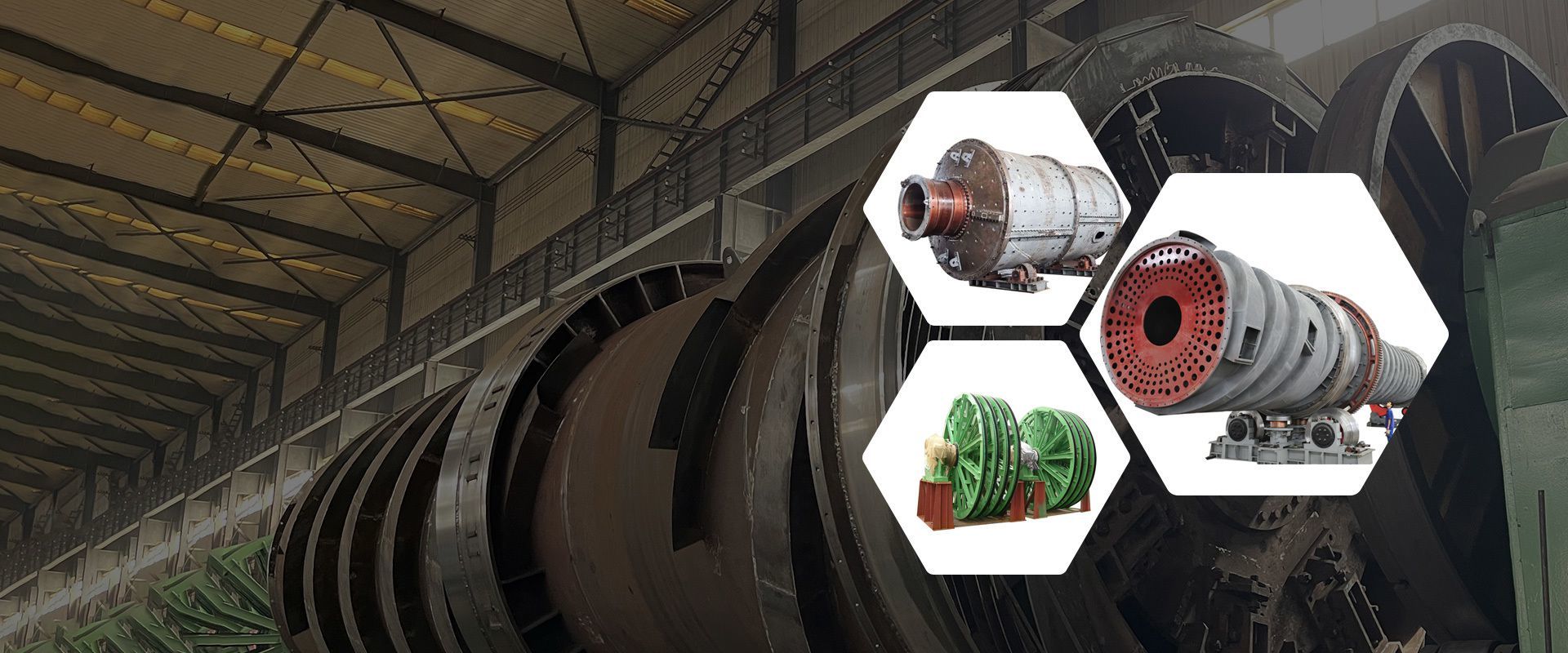
Ball mills, mine hoists and rotary kilns at the centre of the range
The main products named on the official website include ball mills, mine hoists, rotary kilns, rolling mills, crushers, various castings and forgings, hydraulic cylinders, hydraulic systems and electrical control systems. Those families are the backbone of this site, and each one has its own category page that explains what the family covers, where it is normally used, and what a buyer should confirm before asking for a quotation. Nothing on those pages is presented as a measured specification, because the sources available for this build do not carry verified specification tables, and the ruling for this site requires that gap to stay visible rather than filled with plausible numbers.
A buyer who arrives at the home page usually knows the plant problem first and the machine name second, so the navigation follows that order as well. The mining equipment index gathers the twelve official navigation families in one place, the application guides follow cement, mining and mineral processing work, and the selection guides turn the same families into checklists of inquiry questions. Reading the category page first and the matching selection guide second gives a buyer two different angles on the same family without repeating the same claims twice.
Twelve equipment families, organised the way the official website organises them
The twelve families used throughout this site are ball mill, mining hoisting, mining washing and selection, gear reducer series, crusher series, ball press machine, high-pressure grinding roller, rotary kiln, cast and forged parts, transmission accessories, electro-hydraulic control system and other accessories. That list is taken directly from the official website navigation, and it is the only product structure used here. Titles seen on marketplace listings, such as cement ball mill machinery or girth gear listings, are treated as guide topics or title wording only, never as additional product lines and never as a source of dimensions, prices or order quantities.
Each family page keeps the same discipline. It states what the family is, in the terms the official sources use, then it discusses typical application settings in general industry terms, then it lists the points that still need inquiry confirmation. Where the company profile attributes a certification name, the page repeats it only with that attribution and without a number, an issuer or a validity period. Where a detail is not in the sources, the page says so and points to the inquiry form, because an unconfirmed detail presented as a fact would mislead a buyer more than an honest gap.
Applications across mining, metallurgy, building materials and more
The official website states that its products involve more than ten fields, including mining, metallurgy, building materials, washing, shipbuilding, petrochemicals, new energy, related supporting automation control, engineering plastics, high-power reducers and large castings and forgings. The application guides on this site follow those fields without turning a field name into a delivery claim. A cement plant guide, for example, discusses grinding and kiln work as plant processes and explains which questions matter for that setting, while a mineral processing guide discusses washing and selection as a sequence of steps that a buyer should describe in an inquiry.
That distinction matters for heavy machinery more than for small standard goods. A ball mill or a rotary kiln is bought for a particular feed, a particular plant layout and a particular duty, and none of those variables can be settled from a category page alone. The guides therefore spend their length on describing the setting, the neighbouring equipment and the information a supplier needs, rather than on asserting that a standard unit fits every plant. Buyers who can describe their feed material, their throughput aim and their site constraints in the inquiry will get a far more useful answer than buyers who ask only for a price.
Installation, commissioning and technical services as part of the offer
The company positioning states development and design, manufacturing, installation and commissioning and technical services as one undertaking. This site treats that positioning as a description of the company's stated scope, not as a promise about any single order, and the services page explains what a buyer should clarify when those services matter: who carries out installation and commissioning, what site preparation is expected, what documentation accompanies delivery and what technical support covers after handover. Each of those points is framed as an inquiry question, because the sources do not publish a service schedule that could be quoted here.
For the same reason, the inquiry confirmation pages separate three subjects that buyers often merge. The certificates page repeats only the certification names stated in the company profile, with attribution and without numbers. The ordering terms page uses only buyer imperative sentences for minimum order quantity and lead time, and it carries no figures at all. The frequently asked questions page gathers the remaining uncertainties and routes each one back to inquiry confirmation.
How to use this site before sending an inquiry
Start with the mining equipment index if you are comparing families, or go straight to a family page if you already know the machine name. Then read the matching selection guide, which is written from the buyer's side and lists the operating details a supplier will need. Then use the inquiry form to state those details in your own words, including the application field, the material handled and the site conditions that matter. A short inquiry that is complete on those points is more useful than a long inquiry that only names a machine.
If you are unsure which family fits, the buying guide for mining equipment compares the families at the level of plant function rather than at the level of model names, and the application guides show how families work together in cement, mining and washing settings. The blog index lists six further reading topics on comparison and selection, and those articles are planned as full guides rather than short announcements. Every page on this site carries the same company facts panel, so the address, telephone, email and WhatsApp channel shown here are the ones to use, and no personal contact name is published because none is confirmed in the sources.
The twelve families, each in its own words
Ball mill grinding prepares material for the next process, and the ball mill page explains grinding duty, fineness aims and the neighbours that matter for cement, mining and metallurgical settings, without publishing a dimension or a capacity figure for any mill.
Mining hoisting moves people, material and equipment between surface and underground workings, and the hoisting page treats it as mine infrastructure, with shaft setting, load character and operating pattern as the defining questions, and with compliance framed as a question to confirm rather than as an assurance.
Mining washing and selection cleans and separates material, and the washing page explains the process sequence, the separation aim and the plant neighbours, so that a buyer can describe a washing requirement as a process rather than as a machine name alone.
Gear reducer series change speed and torque between a motor and driven equipment, and the reducer page explains why the driven machine defines the requirement, with mill, kiln, hoist and crusher drives as the usual contexts in which a reducer inquiry should be written.
Crusher series reduce large material before grinding or further treatment, and the crusher page explains feed, size reduction aim and next step as the three points that define a crushing duty, with quarry, mine and cement settings as the usual contexts.
Ball press machines compact fine material into briquettes, and the press page explains material, pressed form and next use as the defining points, with fuel, metallurgical and mineral briquetting as the usual settings in general industry terms.
High-pressure grinding rollers grind by compression between rollers, and the roller page explains how that approach differs from tumbling media grinding, and why a buyer should state whether the roller is a main step, a pre-grinding step or a complement to a mill.
Rotary kilns heat material in a rotating vessel at the thermal centre of a cement or metallurgical line, and the kiln page explains material, thermal purpose and plant position as the defining points, with cement, lime and metallurgical settings as the usual contexts.
Cast and forged parts supply the heavy components that mills, kilns, crushers and hoists depend on, and the parts page explains why a part inquiry must name the host machine and the part function, with girth gears and support rollers as the usual examples.
Transmission accessories complete a drive train around a main reducer, and the accessories page explains why the drive context defines the requirement, with mill, kiln, hoist and crusher drives as the usual contexts in which accessories are discussed.
Electro-hydraulic control systems combine electrical control with hydraulic power to operate heavy equipment, and the control page explains why the controlled machine and the functions it must perform define the requirement, with automation control named among the company's fields.
Other accessories form the residual family in the official navigation, and the accessories page explains why an item should be placed there only after its host machine has been checked, so that a vague family name is never filled with invented items.
Guides that turn families into requirements
The selection guides for ball mills, rotary kilns and washing and selection each take one family and turn it into a checklist of questions, so that a buyer can describe a duty instead of only naming a machine. The buying guide for mining equipment takes several families together and turns them into a project inquiry, with plant function first and machine names second.
The application guides for cement grinding, cement kiln work, mining hoisting and crushing each take one plant setting and show how families work together in that setting, with neighbours and next steps included. The mineral processing guide takes the whole sequence, from crushing through grinding and washing to further treatment, and shows how a change in one step affects the others.
The cement mill and mining mill guides clear up a common confusion between overlapping marketplace terms and the official ball mill family, so that a buyer does not mistake a guide title for a separate machine. The girth gear guide clears up a similar confusion for parts, showing how a part title should be read as a topic rather than as a specification.
Together, the guides give a buyer three ways into the same range: by family, by setting and by question. A buyer who reads a family page, the matching guide and the buying guide will have a complete picture of what is on offer and what still needs inquiry confirmation, without encountering a specification that the sources do not support.
Questions buyers ask most, answered honestly
Buyers most often ask for a specification, a certificate document or an ordering figure, and this site answers those three questions in the same way on every page: specifications are not published because no verified table appears in the sources, certificates are repeated only as attributed names and are available upon request, and ordering terms are handled only as buyer imperative sentences with no figures.
Buyers also ask about the company itself, and the answers are given in the same disciplined form: the legal name as it appears on the official website, the address as listed on both sources, the company channels as published, and no personal name, no export list, no customer list and no conflicting scale figure. Those limits are not presented as temporary gaps to be filled by guessing, but as the boundary of what the sources actually support.
A buyer who wants more detail than this site publishes should use the inquiry form and judge the documents the company provides. That route is slower than reading a figure on a website, but it is the only route that produces an answer tied to a specific requirement and supported by a document, and for heavy machinery that difference matters more than speed.
A final note on evidence, before you inquire
Every page on this site carries the same facts panel, so that the company name, the listed address, the company telephone, the company email and the company WhatsApp channel are always visible, and every page carries the same source note, so that the boundary of the evidence is always visible too.
The facts panel also carries the attributed founding statement and the attributed certification names, in the same wording on every page, so that no page makes a stronger claim than any other. If a stronger claim is needed for a tender or a contract, it must come from a document obtained through inquiry, not from a variation in wording between pages. That consistency is the site's main quality control, and it is checked mechanically on every build: forbidden terms, certificate numbers, scale figures, diameters, prices and order figures are all searched for across the whole site, and any hit fails the build.
With that boundary understood, the site is ready to use. Choose a family, read its guide, work through the selection questions, and send an inquiry that describes the setting, the duty and the questions you need confirmed. The company can then answer for the specific requirement, and the buyer can judge that answer against the documents provided, which is the proper basis for a heavy machinery decision.
Ask CITICTLC about your heavy machinery requirement
Use the inquiry form to describe the equipment family, the application field and the site conditions that matter, and the company can confirm what is available for that setting.